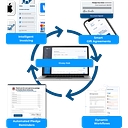
What is an AI Engineer at Givzey?
The AI Engineer role at Givzey sits at the intersection of cutting-edge generative technology and practical product utility. You are not just building models; you are architecting the intelligence that powers Givzey’s automated workflows. Your work directly influences how the platform interprets, processes, and acts upon complex data, making this a high-leverage position where your technical decisions dictate the efficiency and accuracy of the entire system.
This role is critical because Givzey relies on robust AI to solve high-stakes problems for its users. You will be responsible for designing, deploying, and refining systems that handle everything from RAG pipeline design to complex multi-agent systems. If you enjoy bridging the gap between research-grade AI concepts and production-ready, scalable infrastructure, you will find this environment both challenging and deeply rewarding.
Common Interview Questions
The following questions are representative of the patterns you will encounter during your interview loop at Givzey. Use these to gauge your readiness and identify areas where you may need to deepen your technical knowledge.
Generative AI and NLP
Focus on your ability to apply large models to real-world datasets and your understanding of the nuances in current state-of-the-art architectures.
- How would you design a RAG pipeline to minimize hallucinations in a domain-specific knowledge base?
- What are the trade-offs between different embeddings models when optimizing for retrieval latency vs. accuracy?
- Explain how you would implement a multi-agent system to handle a multi-step user task.
- How do you select the right chunking strategy for document retrieval?
- What is your approach to fine-tuning vs. prompt engineering for specific business use cases?
Coding and Algorithms
Expect questions that test your ability to write clean, performant code, particularly in a Python-heavy AI environment.
- Implement a thread-safe cache for LLM API responses.
- Given a stream of text, write a function to identify and redact PII using regex or NLP libraries.
- Optimize a search function that processes high-dimensional vector search results.
- Write a script to monitor the latency of an external LLM endpoint and implement a fallback mechanism.
- Given two sorted arrays of embeddings, find the K-nearest neighbors efficiently.
ML System Design
These scenarios test your ability to build production-grade systems that meet specific SLOs.
- Design a system for LLM serving that balances throughput and cost.
- How would you structure a pipeline to perform continuous model evaluation on production logs?
- How do you handle rate-limiting and cost-tracking in a multi-tenant LLM application?
- Design a scalable architecture to update a vector database in real-time as new data arrives.
Behavioral and Leadership
These rounds assess how you handle ambiguity, cross-functional collaboration, and technical ownership.
- Tell me about a time you had to explain a complex technical trade-off to a non-technical stakeholder.
- Describe a situation where a model you deployed failed in production; how did you debug and remediate it?
- How do you stay updated with the rapid pace of AI research while maintaining delivery velocity?
- Describe a time you disagreed with a technical design choice; how did you advocate for your position?